
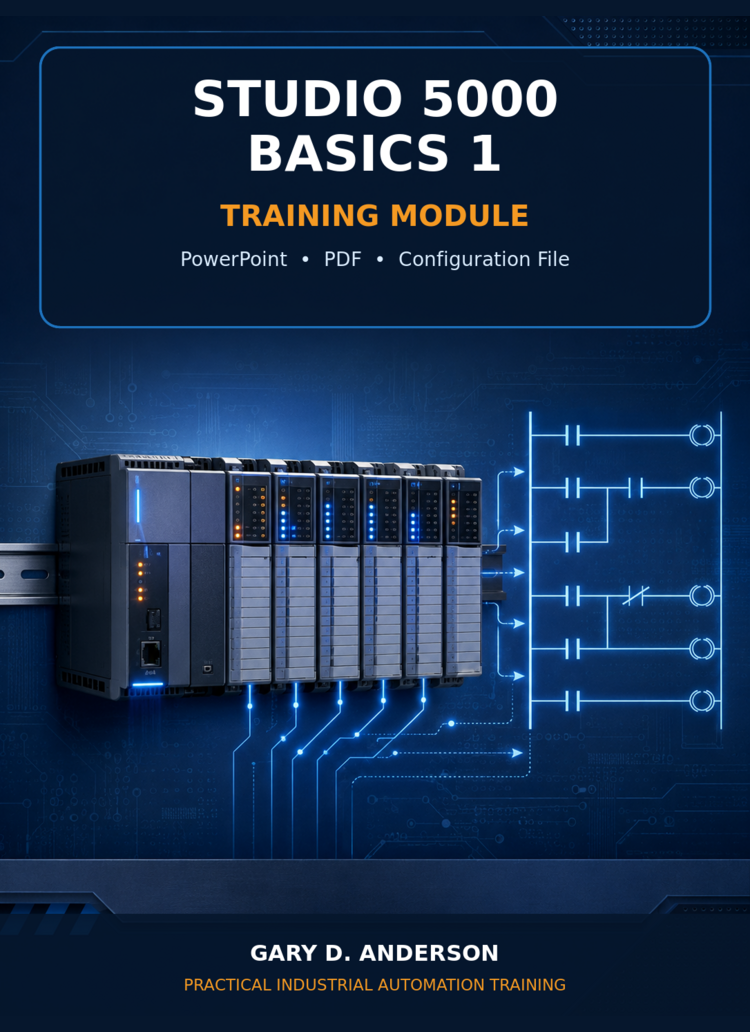
Studio 5000 Basic PLC Programming Training
Practical, step-by-step training for learning the fundamentals of Studio 5000 and ControlLogix programming.
Designed for electrical, maintenance and automation technicians having basic PLC knowledge and are wanting to learn Studio 5000 programming skills.
What You'll Learn
Learn how a Studio 5000 project is organized and how its major programming elements work together. Build a practical understanding of project configuration, ControlLogix I/O, tag-based addressing, data types, and program organization.
Topics Include
- Configuring a new Studio 5000 project
- Understanding Tasks, Programs, and Routines
- Configuring discrete and analog I/O modules
- Using tag-based addressing methods and syntax
- Understanding data types and creating user-defined data types
- Buffering and mapping I/O signals using tags and program parameters
What You Receive:
✓ Studio 5000 training presentation
✓ PDF training material for reference
✓ Studio 5000 config / project file
✓ Programming examples
✓ Challenge problems with solutions
✓ Immediate digital download
Who This Training Is For:
✓ Maintenance and automation technicians
✓ Industrial electricians
✓ Beginner to intermediate Studio 5000 programmers
✓ Technicians transitioning from legacy PLC systems
✓ Anyone with basic PLC knowledge wanting to learn Studio 5000
Recommended level: Basic PLC knowledge recommended.
Practical Training From Real-World Experience
Developed from more than 40 years of experience in the electrical industry, including industrial troubleshooting, automation, and process controls. This training focuses on practical Studio 5000 concepts and programming techniques that technicians can apply in an industrial environment.
A Practical Approach to Learning
This training is designed to explain Studio 5000 in a clear, step-by-step manner, with an emphasis on understanding how a project is organized and how the major programming elements work together. The goal is practical understanding—not simply memorizing software commands.